Abstract
A coloured stripe, a seam or a graphic detail can be protected as a trademark when consumers recognise it as a distinctive sign. This is illustrated by the dispute between K-Way and Armani, decided by the Italian Supreme Court in Judgment No. 5491 of 18 February 2022: even a decorative element can amount to trademark infringement if it creates a likelihood of confusion with another party’s trademark.
K-Way vs Armani: when even coloured stripes become a trademark
Can a company claim exclusive rights over a combination of coloured stripes applied to a jacket? This was the central question in the dispute between K-Way and Armani, which ultimately reached the Italian Supreme Court.
The dispute arose from several Armani jackets featuring coloured stripes. According to BasicNet, the owner of the K-Way trademarks, and Basic Italia, its licensee, those combinations too closely resembled the distinctive signs used on K-Way products.
The dispute concerned two different signs:
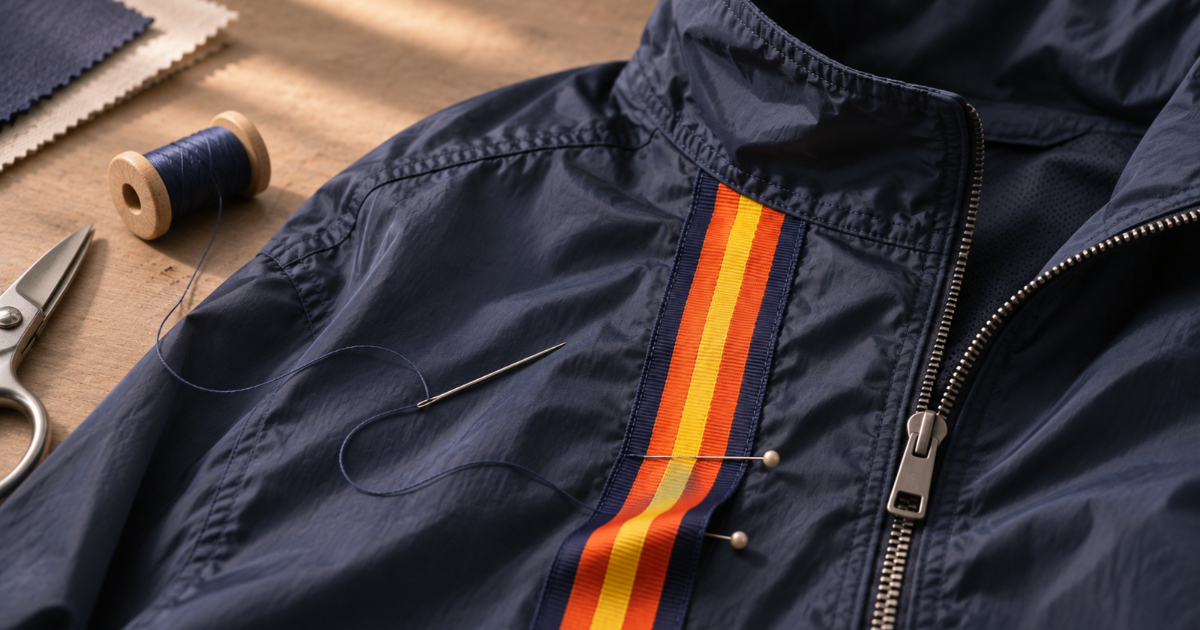
- a registered trademark, consisting of five vertical stripes arranged in the following sequence: navy blue, orange, yellow, orange and navy blue;
- an unregistered trademark, consisting of three stripes in yellow, orange and navy blue, for which the companies claimed protection based on its use and recognition among consumers.
For Armani, the stripes were merely decorative elements. For K-Way, they were distinctive signs that consumers could recognise and associate with the brand.
Legal proceedings began in 2016. Armani also challenged the validity of the registered trademark, arguing that it lacked distinctive character.
The Court of Turin ruled in favour of the K-Way group companies, finding trademark infringement and unfair competition, prohibiting the sale of the disputed garments and ordering their destruction. The Court of Appeal upheld that decision.
The case eventually reached the Italian Supreme Court, which dismissed Armani’s appeal in Judgment No. 5491/2022.
However, an important distinction must be made: the Supreme Court did not reassess the similarity between the jackets. Several grounds of appeal were declared inadmissible because they would have required a fresh assessment of facts already established by the lower courts.
This distinction matters: the dismissal of the appeal does not mean that the Supreme Court conducted a new assessment of the likelihood of confusion between the coloured stripes.
Meanwhile, the validity of the registered trademark had also been challenged before the European Union Intellectual Property Office (EUIPO). The Supreme Court did not consider those proceedings sufficient grounds for staying the Italian case.
Subsequently, in Decision No. C 38884 of 20 October 2022, the EUIPO Cancellation Division rejected the application for a declaration of invalidity filed by Socim.
These were two separate decisions: one concerned infringement of the distinctive signs, while the other addressed the validity of the registered trademark.
When does a decoration become a trademark?
A coloured stripe may simply be a decorative element. However, it can also become a trademark. The difference depends on how consumers perceive it.
Consider a jacket: a combination of colours may serve no purpose other than making the garment more visually appealing. However, if consumers come to recognise that combination and associate it with a particular company, the decoration may also acquire a distinctive function.
These two functions can coexist: a graphic element can enhance a product’s appearance while simultaneously indicating its commercial origin.
This is precisely what the courts recognised in the K-Way case. The coloured stripes had been used extensively, consistently and across different products. Most importantly, it had been established that consumers recognised them as an identifying sign of K-Way products.
The Supreme Court upheld the legal reasoning behind this approach without reassessing the evidence already examined by the lower courts.
But how can a company prove that a decoration has become a trademark? Using it for many years is not enough. It must be demonstrated that consumers have come to recognise it as a distinctive sign.
For an unregistered trademark, relevant evidence may include the duration and extent of use, how the sign is displayed on products, advertising activities and other elements capable of demonstrating consumer perception. Consumer surveys may also be useful, but they are not mandatory: the court may assess the available evidence as a whole.
For a registered trademark, however, the rules of evidence are different. Anyone challenging its validity must prove the existence of the grounds for invalidity relied upon, as provided for in Article 121(1) of the Italian Industrial Property Code.
The distinction is important: proving that an unregistered sign deserves protection is different from demonstrating that a registered trademark is invalid.
Does registering a combination of colours mean obtaining exclusive rights over those colours? No. BasicNet was not claiming a monopoly over navy blue, orange or yellow. The registered trademark protected a specific graphic combination consisting of stripes of defined dimensions arranged in a particular sequence.
Protection therefore extended to the sign as a whole, not to every possible use of the individual colours.
One final issue remains: owning a valid trademark does not mean that every similar sign necessarily constitutes infringement.
This is also illustrated by the Diesel vs Calvin Klein case, concerning stripes applied to jeans. In that dispute, recognising the protection afforded to Diesel’s signs did not prevent the courts from ruling out infringement, in light of the differences identified between the signs being compared.
Can I avoid trademark infringement by using someone else's trademark as a mere decoration?
Armani argued that the coloured stripes on its jackets served a purely aesthetic purpose. But is describing an element as decorative enough to avoid infringing someone else’s trademark?
According to the Supreme Court, it is not. In Judgment No. 5491/2022 (paragraph 17.2), the Court ruled that an ornamental purpose could not justify the use of a sign that had already been found likely to be confused with K-Way’s signs.
The issue does not depend solely on the intentions of the person designing or manufacturing the product, but also on how consumers perceive the sign being used.
Article 21 of the Italian Industrial Property Code and Article 14 of Regulation (EU) 2017/1001 permit, under certain conditions, specific uses of signs or indications that coincide with another party’s trademarks. However, a purely aesthetic purpose is not among the exemptions provided for by those provisions.
This does not mean that every similarity amounts to infringement. For similar signs used on identical or similar goods, Article 9(2)(b) of Regulation (EU) 2017/1001 requires a likelihood of confusion.
In the K-Way case, the lower courts had already established that such a likelihood existed. The Supreme Court therefore rejected Armani’s defence without conducting a fresh assessment of the similarity between the products.
What checks should be carried out before using a decorative element?
Before applying coloured stripes, graphic patterns or other decorative elements to a product, it is advisable to check that they do not interfere with the rights of other companies. The best time to do so is before production begins, when changing a design does not yet involve significant costs.
The first step is to conduct a prior trademark search to identify any similar registered trademarks. The search should also extend to the market itself: certain signs, although unregistered, may still enjoy protection through their use and the recognition they have acquired among consumers.
Once potentially relevant signs have been identified, they should be compared with the proposed decoration, taking into account colours, proportions, the arrangement of elements and the overall impression they create. The assessment should also consider the products concerned and how they are presented to consumers.
It is not enough to ask whether two designs are identical. What matters is whether consumers might confuse them or mistakenly believe that the products originate from the same company or from economically linked businesses. Adding your own logo does not necessarily eliminate this risk.
If potentially problematic similarities emerge, it is advisable to modify the design and document the alternatives considered before launching the collection.
Companies wishing to protect their own decorative elements should first define their characteristics precisely and assess whether registration as a trademark would be appropriate. It is also useful to retain dated catalogues, photographs, advertising campaigns and commercial records showing how and for how long the sign has been used.
For unregistered trademarks, this documentation can be particularly important, provided that it also helps demonstrate that consumers recognise the sign as an indicator of commercial origin.
The K-Way vs Armani case offers one lesson above all: an apparently minor graphic detail can become the focus of costly litigation. Checking existing rights and considering the timely registration of distinctive signs can prevent a design detail from turning into a legal problem.
Revisionato da: Arlo Canella
Data di pubblicazione: 12 Novembre 2026
© Canella Camaiora S.t.A. S.r.l. - Tutti i diritti riservati.
È consentita la riproduzione testuale dell’articolo, anche a fini commerciali, nei limiti del 15% della sua totalità a condizione che venga indicata chiaramente la fonte. In caso di riproduzione online, deve essere inserito un link all’articolo originale. La riproduzione o la parafrasi non autorizzata e senza indicazione della fonte sarà perseguita legalmente.

Margherita Manca
Avvocato presso lo Studio Legale Canella Camaiora, iscritta all’Ordine degli Avvocati di Milano, si occupa di diritto industriale.